Introduction
Many people entering the fragrance industry often confuse essential oils with perfume compound oils. Although both are used in fragrance-related products, they serve different purposes and offer different benefits. Understanding these differences can help manufacturers, entrepreneurs, and perfume enthusiasts make informed decisions when creating fragrance products.
What Are Essential Oils?
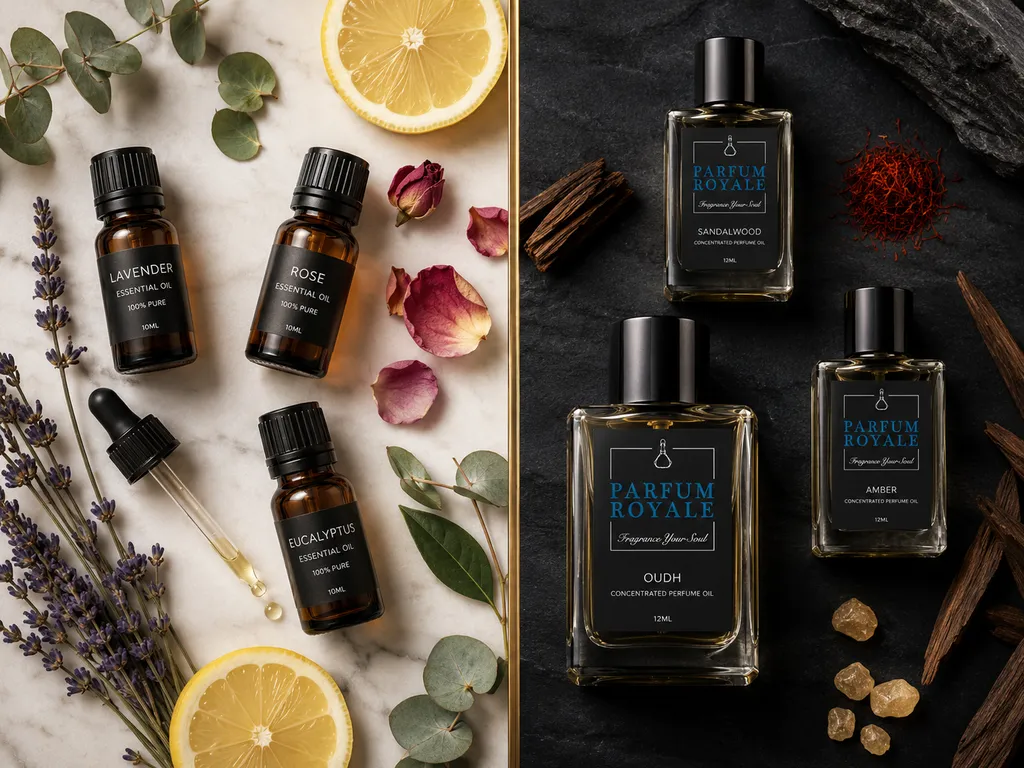
Essential oils are natural aromatic extracts obtained from plants, flowers, leaves, bark, roots, seeds, and fruits. They are commonly produced through steam distillation or cold pressing methods. Popular examples include lavender oil, peppermint oil, lemon oil, eucalyptus oil, and rose oil.
Essential oils are widely used in aromatherapy, personal care products, wellness applications, and natural fragrances.
What Are Perfume Compound Oils?
Perfume compound oils are specially formulated fragrance blends created using natural ingredients, aroma chemicals, essential oils, and synthetic fragrance molecules. They are designed to provide specific scent profiles and consistent performance across different applications.
Key Differences
- Essential oils are natural extracts, while perfume compounds are formulated blends.
- Essential oils may vary between harvests, whereas perfume compounds provide consistent fragrance quality.
- Perfume compounds offer greater fragrance variety and longevity.
- Essential oils are often used for therapeutic purposes, while perfume compounds focus on fragrance performance.
Advantages of Essential Oils
- Natural origin
- Popular in wellness products
- Aromatherapy benefits
- Consumer appeal for natural products
Advantages of Perfume Compound Oils
- Better fragrance consistency
- Wider scent options
- Improved longevity
- Cost-effective manufacturing
- Suitable for perfumes, deodorants, candles, and air fresheners
Which One Should You Choose?
The choice depends on your product goals. If you are creating aromatherapy products, essential oils may be appropriate. If you are manufacturing perfumes, body sprays, attars, or home fragrance products, perfume compound oils generally offer superior performance and flexibility.
Applications of Perfume Compound Oils
- Perfumes and Attars
- Body Sprays
- Deodorants
- Reed Diffusers
- Air Fresheners
- Scented Candles
- Incense and Bakhoor
Conclusion
Both essential oils and perfume compound oils have important roles in the fragrance industry. Understanding their strengths and limitations allows businesses to select the right ingredients for their products. For commercial fragrance manufacturing, perfume compound oils remain one of the most versatile and practical solutions available today.